
Homepage
Homepage – Satsati | The Tech Mind
Welcome to Satsati | The Tech Mind, a platform that connects philosophy, creativity, and technology. Our vision is to provide a structured knowledge system designed to expand human analytical and operational capabilities, while maintaining a close connection to the human spirit
Continuous learning and data collection form the foundation of this system, enabling it to process information on a large scale and adapt to changing inputs. Knowledge functions as an open and unlimited dataset, ensuring scalability regardless of the amount of data processed.
The Human and the Technological Mind
The human brain operates through a biological structure comprised of neural networks, sensory pathways, and dynamic feedback loops. It interprets stimuli, generates meaning, and executes actions closely linked to bodily functions. In contrast, the technological brain—represented by advanced intelligence—relies on structured data, algorithmic models, and specific memory units. While artificial intelligence processes information within limited frameworks, it serves as a functional extension of human cognition, supporting decision-making and complex tasks without replacing the human mind
Towards a Third Mind
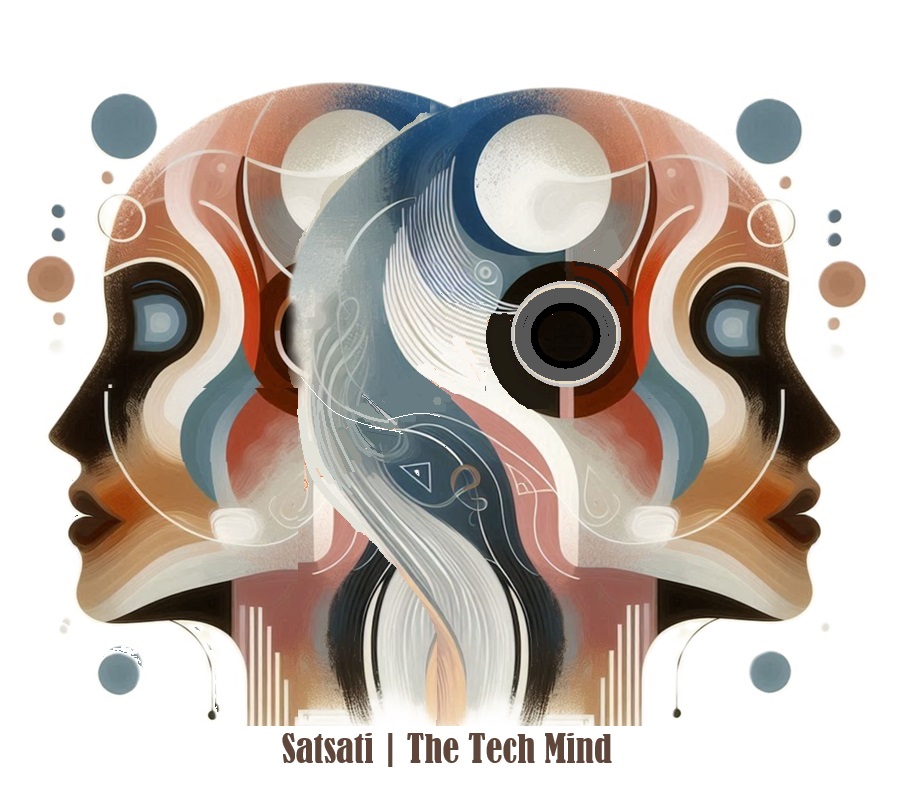
Humanity stands at a crossroads today: the emergence of a third mind. This hybrid cognitive space arises from the interaction between human consciousness and technological intelligence. It is philosophical because it questions the foundations of knowledge and meaning. It is humanistic because it reflects creativity, needs, and imagination. And it is technological because the tools we build actively participate in our cognitive processes, expanding memory and altering interpretation
Our Mission
Through more than 400 articles and pages, we strive to build educational, training, and applied platforms that embody this vision. Our mission is to create a shared environment where human and technological systems collaborate to shape new patterns of understanding, creativity, and decision-making.